
Bulk Expanded PTFE Gasket Materials for Reliable Industrial Sealing
2026-11-17
Industrial sealing failures rarely announce themselves politely—they leak, seize, or degrade at the worst possible moment. Bulk expanded PTFE gasket materials take a different approach, offering compressibility and chemical resistance that hold up under thermal cycling and aggressive media. Whether you're lining a glass-lined vessel or sealing a flange with imperfect surfaces, the right expanded PTFE can mean the difference between planned maintenance and emergency downtime. At TAIFNO, we focus on consistently dense, creep-resistant expanded PTFE sheets and rolls that cut cleanly and seal reliably. This guide breaks down what actually matters when selecting bulk expanded PTFE for demanding industrial applications—so your next gasket is predictable, not a gamble.
What Makes Expanded PTFE Different from Standard Gaskets
Most standard gaskets depend on binders, fiber reinforcements, or a precisely cut sheet that has to sit on a clean, flat flange face. Expanded PTFE goes a different route: it starts as pure PTFE and gets stretched into a highly fibrillated, microporous structure. That structure gives it a degree of conformability that rigid or semi-rigid gasket materials simply cannot match, so it settles into surface imperfections instead of bridging over them.
The practical difference shows up at installation. Standard gaskets usually need higher bolt loads and careful torque sequencing to seat properly, which can be a problem on glass-lined, plastic, or older flanges. Expanded PTFE compresses at much lower stress and keeps a tight seal even when the flange has minor scoring, distortion, or uneven contact. Rather than forcing the flange to match the gasket, the gasket does the adjusting.
Over time, many conventional gaskets lose load through creep relaxation or become brittle after repeated thermal cycling. Expanded PTFE resists that failure mode because its node-and-fibril network holds its shape under pressure while still allowing enough recovery to follow temperature swings. The result is fewer retorques, less downtime, and a seal that stays stable in conditions that would make standard materials crack or leak.
Common Failure Points in Industrial Sealing and How This Material Avoids Them
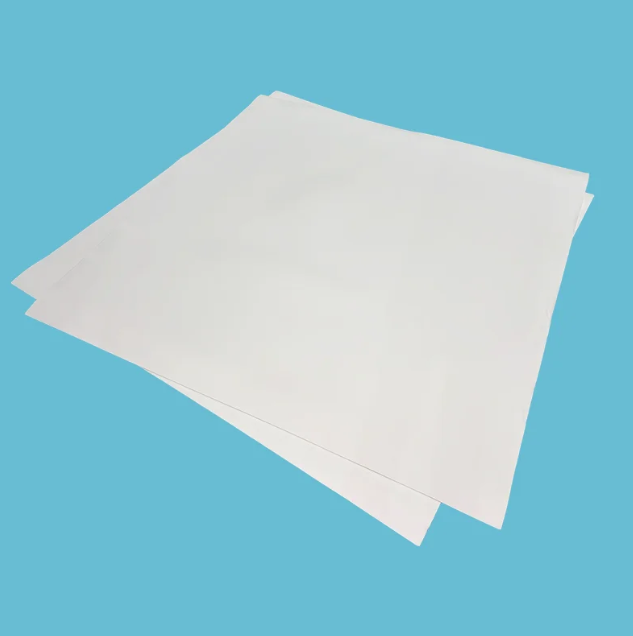
In practice, seal failure rarely shows up as a single dramatic break. More often it is the result of small, repeated insults: a pressure spike forces a soft lip into the flange gap, thermal cycling takes away the material’s memory, or a trace of solvent slowly stiffens the contact face. Once recovery drops below the point where the seal can follow the mating surfaces, a leak path opens and shortens the service interval.
The difference with this material is that it refuses to trade chemical resistance for resilience. It resists extrusion under load because its modulus holds the cross-section stable without becoming brittle. After long exposure to heat, it still pushes back against the flange instead of taking a permanent set. In acids, caustics, oils, and aggressive solvents, the surface stays dimensionally stable rather than swelling, softening, or cracking, so the initial sealing stress is not silently eroded.
Installation and real-world misalignment also cause their share of failures. The material tolerates rough flange finishes and minor nicks that would slice or gouge softer compounds. Under vibration and pressure pulsation it keeps a quiet grip on the sealing faces instead of fretting, twisting, or being nibbled away at the edges. That reduces the usual failure chain from a steady leak into a rare exception.
Selecting the Right Thickness and Density for Uneven Flanges
Uneven flanges punish stiff, thin gaskets. A thicker, lower-density material works into the hollows and high spots instead of lying across them, so the seal forms where the flange actually touches. Look for enough compressibility to absorb the measured step or bow without needing excessive bolt torque.
Going denser is not automatically safer. High-density sheets resist flow and often leave a faint channel at the low side of the joint. The better approach is to match density to the available bolt load: soft enough to conform at the worst gap, firm enough to survive the operating temperature and pressure without relaxing into a leak.
A useful starting point is to shim-check the flange with feeler gauges in several spots. Take the largest gap and choose a thickness that can compress at least twice that distance at the intended seating stress. Then verify the flange can handle that load without bending, especially on light or irregular castings.
Installation Notes That Prevent Most Leakage Complaints
Most leaks blamed on product defects actually trace back to a handful of installation oversights. Cleaning mating surfaces with a solvent wipe before assembly removes invisible films, old gasket residue, and machining debris that prevent a reliable seal. If the flange or thread looks glossy, it is not ready for the gasket or tape.
Tighten in the right sequence and in stages. Even pressure matters more than raw torque. On multi-bolt flanges, work in a crisscross or star pattern and bring each fastener up gradually. This keeps the sealing face flat and avoids pinching one side, a common cause of slow drips that only appear after the system reaches operating temperature.
Finally, respect the cure and settle-in time before pressurizing. Many sealants and compression gaskets fail simply because the system was filled too soon or heated before the material could conform. Run a low-pressure hold test first, check for dampness at joints, and retorque only after the assembly has cooled. These small habits eliminate the majority of callbacks.
Chemical and Temperature Limits Often Overlooked in Specification Sheets
Spec sheets tend to treat chemical resistance as a short list of compatible fluids, but real process streams rarely behave that neatly. A gasket may be rated for dilute sodium hydroxide, yet fail after weeks of exposure to a 5% solution at 65°C because the datasheet never mentions that the rating assumes room temperature and intermittent contact. Blended fluids, cleaning agents, and trace contaminants can be more aggressive than the primary chemical listed in the application, so a material that passes a single-fluid immersion test can still soften, swell, or crack once it sees a mixture or a thermal cycle.
Temperature limits have the same blind spot. The maximum service temperature on a datasheet is often derived from short-term thermal stability tests, not from long-term exposure under load. A part may keep its shape at 120°C in dry air but lose mechanical strength at 90°C when exposed to hot water, glycol, or repeated steam flushing. Chemical attack and heat also feed on each other: higher temperatures accelerate oxidation, hydrolysis, and plasticizer loss, which means the safe operating window shrinks faster than either rating alone would suggest. Checking the fine print for concentration, duration, and pressure makes more sense than trusting the bold number at the top of the page.
Why Maintenance Teams Are Switching from Sheet Gaskets to Bulk PTFE Stock
Sheet gaskets always seem to demand a trade-off. Cut one too small and you have a leak path; cut it slightly off-center and the bolt holes no longer line up. Bulk PTFE stock removes that whole ritual. Maintenance crews can shape exactly what they need from a single rod or tube, which means less scrap, fewer mismatched inventory bins, and a repair that fits on the first attempt rather than the third.
There is also the matter of downtime. Waiting on a pre-cut sheet to arrive, or digging through old gasket cabinets for a size that was discontinued two years ago, quietly eats into a shift. With PTFE stock on the shelf, the material is already in the building. A quick machining pass or even a careful hand-cut gives you a chemically inert, temperature-tolerant seal that handles aggressive fluids without swelling or degrading the way many fiber-based sheets do.
Over time, the accounting starts to favor bulk stock as well. Instead of storing dozens of sheet varieties for different services, a modest selection of PTFE rods and tubes covers most non-metallic sealing needs. The team spends fewer hours on rework, the store room stops looking like a gasket graveyard, and unexpected equipment changes become a straightforward modification rather than a procurement emergency.
FAQ
Expanded PTFE is processed into a highly compressible, microporous form, so it seats against irregular or lightly scored flange faces far more easily than rigid skived PTFE. That same conformability lowers the bolt load needed to create a reliable seal.
Yes, expanded PTFE keeps the broad chemical resistance PTFE is known for. It stands up to strong acids, caustics, and solvents without breaking down, which is why it shows up in chemical transfer, pharmaceutical, and pulp and paper lines.
Keep them in a cool, dry area away from direct sunlight and sharp objects. Rolls should lie flat or be supported evenly so the edges do not take a set, and sheets should stay covered until cutting to avoid surface contamination.
Many expanded PTFE gasket products are made from virgin PTFE and meet FDA requirements for food contact. They are regularly used in dairy, beverage, and pharmaceutical process connections where clean sealing and chemical compatibility are both critical.
Expanded PTFE generally handles temperatures from cryogenic conditions up to roughly 260 degrees Celsius, while pressure performance depends on flange design, thickness, and gasket stress. It is strongest in low to medium pressure systems, especially where flanges are uneven or fragile.
Standard cutting tools work, but blades should be sharp to avoid stretching or tearing the material. During installation, a moderate and even bolt-up procedure works best because the material compresses readily and does not require aggressive torque.
It has some tendency to relax after initial compression, particularly at elevated temperatures. That is normal and can be managed by following a proper seating sequence and, when needed, rechecking bolt load after the first thermal cycle.
Thickness choice depends on flange condition and pressure. Thinner sheets are usually better for smooth, rigid flanges, while thicker material helps absorb irregularities in damaged, warped, or fiberglass flanges.
Conclusion
Expanded PTFE earns its place in industrial sealing less through raw strength than through the way it yields under load. Standard gaskets often struggle when flange faces are pitted, scored, or slightly misaligned; the material either bridges the defect or cracks while trying to fill it. Bulk expanded PTFE, by contrast, compresses into irregularities without becoming brittle, so the seal forms where leakage actually begins. Much of the field failure with conventional sheet gaskets comes down to creep relaxation and uneven bolt load. Once the initial crush subsides, those products lose contact stress and start weeping. Expanded PTFE retains a lower, more stable stress profile and resists the hardening that plagues many fiber and rubber bound sheets. That means fewer retorques and fewer surprise emissions during thermal swings.
Thickness and density matter more than most specification sheets admit, especially on uneven flanges. A thinner, denser grade may handle pressure well but cannot conform to a warped face, while an overly soft, thick sheet can extrude under load. Matching the material to flange condition and service temperature prevents a large share of complaints. Installation is equally specific: clean the surface, bring bolts up in stages, and avoid the temptation to overcompress the gasket. Expanded PTFE performs best when it is seated firmly, not crushed flat. Maintenance crews also appreciate bulk PTFE stock because it cuts inventory complexity and allows fast fabrication of odd sizes without waiting on die-cut sheets. Still, the practical limits deserve attention. Strong alkali services, fluorine-rich streams, and extreme heat can push this material beyond its reliable range even when general chemical compatibility looks acceptable. Checking those boundary conditions before installation keeps a versatile product from being blamed for failures it was never suited to handle.
Contact Us
Contact Person: Tommy Xiao
Email: [email protected]
Tel/WhatsApp: 8615651509888
Website: https://www.ptfe-factory.com