
Bulk Micronized Monopentaerythritol A Key Ingredient for High-Performance Coatings
2026-10-08
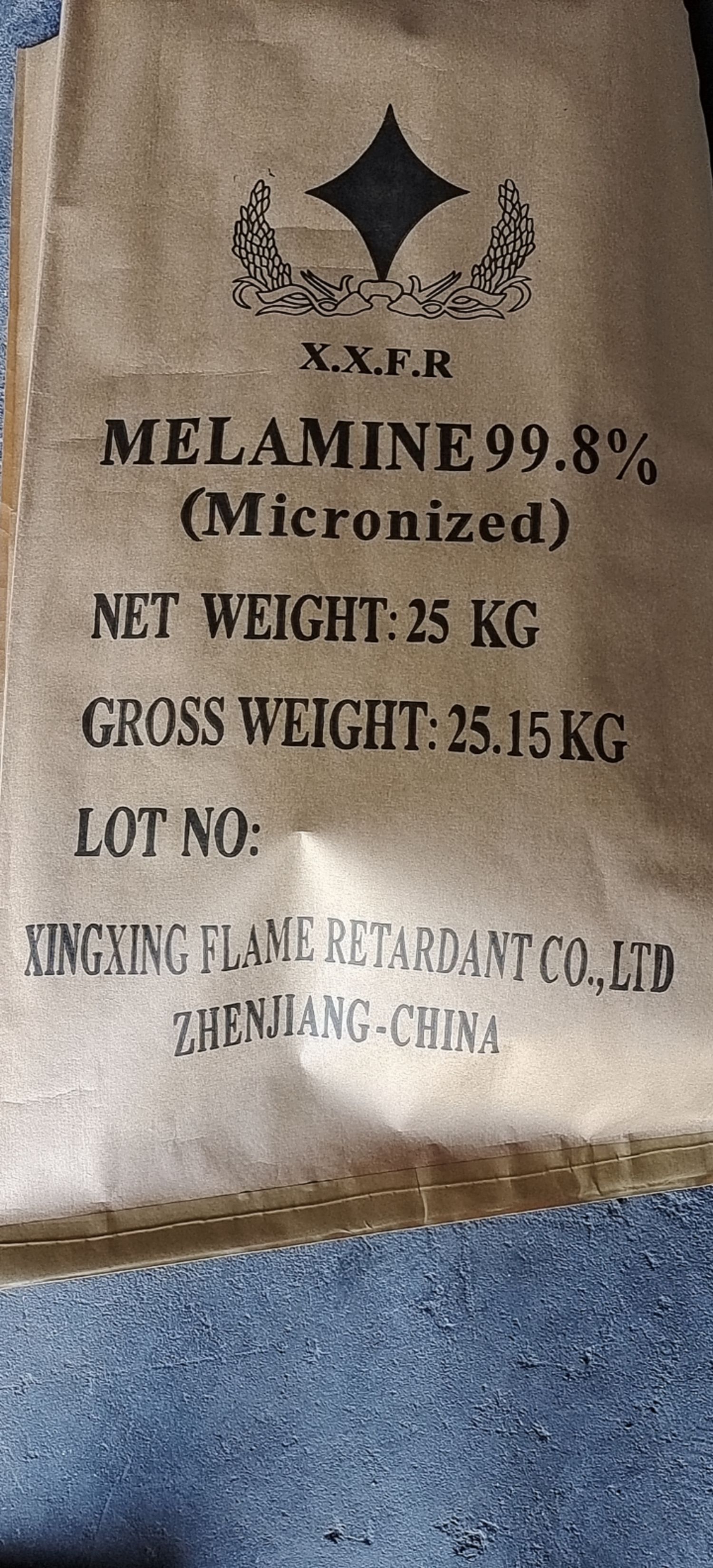
Coatings fail for a thousand reasons, but formulators keep circling back to one quiet culprit: the reactive backbone. Bulk micronized monopentaerythritol is that backbone's sharper, more predictable cousin—finer particles, faster incorporation, and fewer surprises when the film has to perform. If you're tired of chasing consistency across batches, it's time to look at where that polyol actually comes from. X.X.F.R supplies the kind of material that lets your formulation speak for itself.
What Micronized Monopentaerythritol Brings to Coating Resins
Micronized monopentaerythritol acts as a compact, tetrafunctional polyol that inserts a high density of reactive hydroxyl sites into coating resin backbones. In polyester and alkyd syntheses, its fine particle size shortens dissolution time and minimizes hot spots during esterification, which leads to more consistent molecular weight distribution. The result is a resin that cures to a harder, more solvent-resistant film without sacrificing clarity.
Beyond faster incorporation, the micronized form brings a practical edge in high-solids and powder coating formulations. Because the particles disperse evenly rather than clumping, formulators see fewer gel specks and a smoother surface profile after baking. This uniformity also helps when monopentaerythritol is used alongside neopentyl glycol or trimethylolpropane, allowing a tighter balance between toughness and flexibility.
Durability gains are another reason resin chemists reach for this material. Coatings built with monopentaerythritol tend to show better resistance to yellowing under heat and UV exposure, and they hold up well against acids, alkalis, and household chemicals. For can coatings, coil coatings, and industrial enamels, that extra crosslink density translates into longer service life without a major increase in raw material cost.
Particle Size and Film Clarity – A Connection Worth Understanding
When you hold a thin plastic film up to the light and notice a milky haze or a faint cloudiness, you're often looking at the fingerprints of particle size. The connection is direct: as particles embedded in or coated onto a film grow larger, they scatter more light in every direction, stealing the crispness from what should be a clear view. It's not just a theory—anyone who has compared a cheap, gritty protective sleeve to a high-end optical film has seen the difference in real time. The smaller and more uniform the particles, the less they interfere with the straight path of light, and the more the film seems to disappear into the surface it covers.
The tricky part is that clarity doesn't improve on a simple sliding scale. Particles in the range of a few hundred nanometers to a couple of micrometers are actually the worst offenders, because their size is close to the wavelength of visible light itself. This makes them unusually efficient at bending and bouncing photons off course, producing that dull, washed-out look. Below that range—down into the tens of nanometers—light can pass almost undisturbed, so a film loaded with very fine, well-dispersed particles can remain nearly transparent. But if those tiny particles clump together into larger agglomerates, even for a moment during drying or curing, the haze returns with a vengeance. It's less about the average size printed on a spec sheet and more about the actual size distribution and how well the particles stay separated in the final film.
In practice, formulators chase this connection every day without always naming it. A coating that looks perfectly clear in the can might turn hazy after application, not because the chemistry changed, but because the particles found each other and grew into light-scattering clusters. The fix is rarely a single magic additive; it's a combination of choosing the right particle size from the start, keeping the dispersion stable through shear and solvent loss, and sometimes swapping out a slightly larger filler for one that stays below the scattering threshold. Understanding this relationship means you stop guessing why one batch sparkles and another looks like frosted glass—you start controlling the invisible geometry that decides whether light gets through clean or gets thrown off course.
How a Four-Functional Polyol Improves Crosslink Density Without Thickening
In coatings and elastomers, raising crosslink density usually means higher resin viscosity, because you either increase molecular weight or load up on multifunctional monomers that tangle early. A four-functional polyol flips that logic. Its four hydroxyl sites are distributed on a compact, often star-shaped backbone, so each molecule contributes multiple network junctions without dragging along long, entangling chains.
The reason it doesn't thicken comes down to molecular architecture. Because the arms are short and the core is small, the polyol has a low hydrodynamic volume and low solution viscosity even at high solids. Yet once the curing reaction starts, those four hydroxyl groups react into the matrix, creating a tighter mesh with more crosslinks per unit volume than a linear diol of similar hydroxyl equivalent weight.
This lets formulators push up hardness, chemical resistance, or modulus without losing sprayability or flow. You get the performance of a heavily crosslinked system while keeping the uncured mixture workable—something that's especially useful in high-solids and low-VOC formulations where solvent can't hide viscosity problems.
Bulk Handling and Storage – Keeping Micronized Powder Free-Flowing
Micronized powders tend to pick up moisture and electrostatic charge faster than coarser materials, which quickly turns a free-flowing batch into something that clings, bridges, or refuses to discharge evenly. In bulk storage, the first line of defense is controlling the atmosphere around the powder: keep silo or bin headspace dry, avoid wide temperature swings that cause condensation, and consider nitrogen blanketing if the material is hygroscopic or oxidation-sensitive. Even simple steps like sealing manways, using desiccant breathers, and keeping fill lines short can noticeably reduce lump formation before it starts.
The physical design of the storage vessel matters just as much. Mass flow hoppers with steep, smooth walls encourage first-in, first-out movement and minimize stagnant zones where powder can compact. Pair this with low-amplitude vibrators or air pads placed only where bridging actually occurs—over-vibration often packs the powder tighter instead of loosening it. For materials that remain stubborn, adding a small percentage of fumed silica or another dry flow aid at the blending stage can coat particles and neutralize surface moisture, helping the powder stay free-flowing through weeks of storage and repeated discharge cycles.
Operational habits also play a quiet role. Letting ultrafine powder sit untouched for weeks invites compaction under its own weight, so periodic slow discharge or recirculation can keep the bed from locking up. Track moisture content and flow behavior at incoming inspection, and rotate stock so older material moves out first. Small adjustments—like slowing fill rates, reducing drop height into the bin, and keeping transfer lines grounded to limit static buildup—often go further than expensive retrofits when the goal is a consistent, free-flowing powder at the discharge point.
Formulating High-Solids and Low-VOC Coatings with Monopentaerythritol
Monopentaerythritol plays a surprisingly versatile role in high-solids coating systems, where every gram of solvent removed pushes formulators to rethink resin architecture. Unlike conventional polyols that demand heavy dilution to achieve workable viscosity, monopentaerythritol's compact, tetrafunctional core allows for dense branching without excessive molecular weight buildup. This translates into oligomers that flow under high shear yet cure into tight networks, cutting volatile organic content while preserving film integrity.
Working with monopentaerythritol in low-VOC formulations often means confronting its high melting point and limited solubility in common solvents. Practical approaches include pre-reacting it into partial esters or using it as a chain extender in alkyd and polyester backbones, where its hydroxyl groups anchor crosslinking sites. The resulting resins exhibit a sharp drop in viscosity when warmed, enabling spray application at near-neat solids. Careful control of acid value and residual hydroxyl content becomes critical to avoid gelation during synthesis.
Field experience shows that replacing a portion of trimethylolpropane with monopentaerythritol can lift hardness and chemical resistance without sacrificing flexibility, provided the stoichiometry is tuned to leave enough unreacted hydroxyls for curing. Some formulators pair it with reactive diluents like oxazolidines or low-viscosity isocyanates to keep application viscosity below 100 seconds in a Zahn cup. The payoff is a coating that meets stringent VOC limits while delivering the sort of tough, glossy finish that used to require solvent-heavy systems.
Field Performance – Industrial and Automotive Topcoats That Outlast Expectations
Nobody budgets for repainting a warehouse roof or a fleet of haul trucks every couple of years, yet that’s exactly what happens when a topcoat falls short in the real world. Our industrial and automotive finishes are tested on active job sites, not just in lab cabinets, where UV spikes, chemical splashback, stone chips, and constant washdowns chew through ordinary coatings fast. The result is a topcoat that keeps its gloss, color stability, and adhesion long after the warranty period ends—often doubling the service interval our customers previously accepted as normal.
What separates field-proven performance from marketing claims comes down to how the coating handles thermal cycling and mechanical stress. Bridges expand and contract daily. Tanker trailers flex under load. Process equipment vibrates nonstop. Our topcoats are formulated with a balance of elongation and hardness that lets them move with the substrate instead of cracking at stress points. This reduces the micro-fissures where corrosion starts, keeping rust and delamination at bay even on edges, welds, and bolted connections that typically fail first.
We also track long-term field data from applicators and maintenance crews across different climates—coastal salt spray, desert heat, northern freeze-thaw, and high-humidity chemical plants. That feedback loop drives small formulation adjustments most suppliers never bother with, like improving early water resistance for rainy-season applications or tuning sag resistance for hot-weather spraying. The payoff shows up years later when the topcoat still looks factory-fresh and the only maintenance required is a routine rinse, not a full strip and recoat.
FAQ
Its fine particle size and high purity allow for faster dissolution during resin synthesis and more consistent crosslinking, which translates into harder, more durable films without compromising clarity.
The micronized version disperses and reacts more readily, reducing processing time and energy input. You also get fewer undissolved particles, which can cause surface defects in the final coating.
It acts as a multifunctional alcohol that builds branched polymer structures. This branching increases crosslink density, improving chemical resistance, hardness, and thermal stability of the cured coating.
Because it is finely divided, you need to control dust and moisture exposure. Use sealed silos or supersacks, keep the material dry, and ensure proper ventilation during transfer to avoid clumping and maintain flowability.
Yes, it can contribute to faster curing and better flow and leveling, because the consistent particle size leads to uniform reaction kinetics. This often results in smoother finishes with fewer pinholes or orange peel effects.
You typically see improved gloss retention, better resistance to yellowing under heat or UV exposure, and enhanced adhesion to metal substrates, which are critical for industrial and automotive topcoats.
It works in both. In waterborne systems, its fine particle size helps it dissolve quickly during resin neutralization or emulsification, enabling high-solids formulations with low VOC content.
Key factors include consistent particle size distribution, low residual ash and moisture, and reliable bulk density. A supplier that can provide batch-to-batch consistency will help avoid reformulation surprises.
Conclusion
Micronized monopentaerythritol has quietly become a workhorse in high-performance coating resins, largely because its four primary hydroxyls create a denser crosslink network without driving formulation viscosity upward. This is not a trivial balancing act: most polyols that boost crosslink density also thicken the system, forcing formulators to add more solvent. With micronized monopentaerythritol, the small, uniform particle size ensures rapid dissolution and smooth film formation, so clarity stays intact even in thin clearcoats. Bulk handling is another overlooked advantage. The micronized powder remains free-flowing in storage, resisting caking and bridging in hoppers, which keeps production lines moving without manual intervention.
In high-solids and low-VOC systems, this polyol earns its keep by allowing a meaningful reduction in volatile content while maintaining sprayability and gloss. Field performance backs up the lab data: industrial and automotive topcoats formulated with monopentaerythritol routinely outlast conventional counterparts in weathering, chemical resistance, and hardness retention. The combination of cleaner formulations, less waste during handling, and longer service life makes bulk micronized monopentaerythritol more than just an additive—it is a strategic ingredient for coatings that need to meet tightening environmental rules without sacrificing performance.
Contact Us
Contact Person: Guohua Wang
Email: [email protected]
Tel/WhatsApp: 8613003442895
Website: https://www.xxflameretard.com