
Bulk Refined Montana Wax Supplier Selection Tips for Consistent Product Quality
2026-11-21
Sourcing bulk refined Montana wax that behaves the same way from batch to batch is harder than most purchasing teams expect. A supplier’s certificate may look clean while melt point drift, oil content, or filtration residue quietly compromise your downstream product. At XUSHI, we have seen how small upstream decisions separate dependable wax from costly variability. This guide walks through the practical selection points that protect consistency, shorten incoming QC time, and make your supplier relationship easier to audit.
Pin Down the Raw Wax Source Before Sampling Anything
The most overlooked risk in wax sampling isn't the wax itself; it's the story nobody traced before the sample jar was opened. A batch can pass every visual and scent check and still fail later because the raw material shifted between suppliers, regions, or even harvest cycles. Before you smell anything, before you pour a single test, lock down where the wax actually came from. Ask for the lot number, the source location, the processing date, and whether the supplier blends material from multiple farms or facilities. If the answer sounds vague, assume the sample will not represent what you receive in production.
Early-stage sampling often hides blending as a quiet variable. A supplier might send a "representative" sample drawn from a homogenized tank, while the real shipment comes from a different batch with a wider melt point range or slightly different color. That gap shows up later as inconsistent texture, poor fragrance retention, or adhesion problems. The fix isn't to sample more; it's to demand source traceability before accepting the sample. If the source cannot be pinned to a single, repeatable point—or at least a disclosed blend ratio—the results you collect will mislead your formulation choices.
There's also a practical benefit to pinning the source early: it gives you a baseline for reorders. When a wax performs exceptionally well, you need to know exactly what made it perform that way. Without a source record, you're gambling that the next delivery will behave the same. Write down the supplier, the grade, the lot, the date received, and any handling notes. That small habit turns a one-off sample into a repeatable material decision, saving you from reformulating later because the "same" wax suddenly doesn't behave like itself.
Ask How the Refiner Handles Color, Ash, and Resin Variations
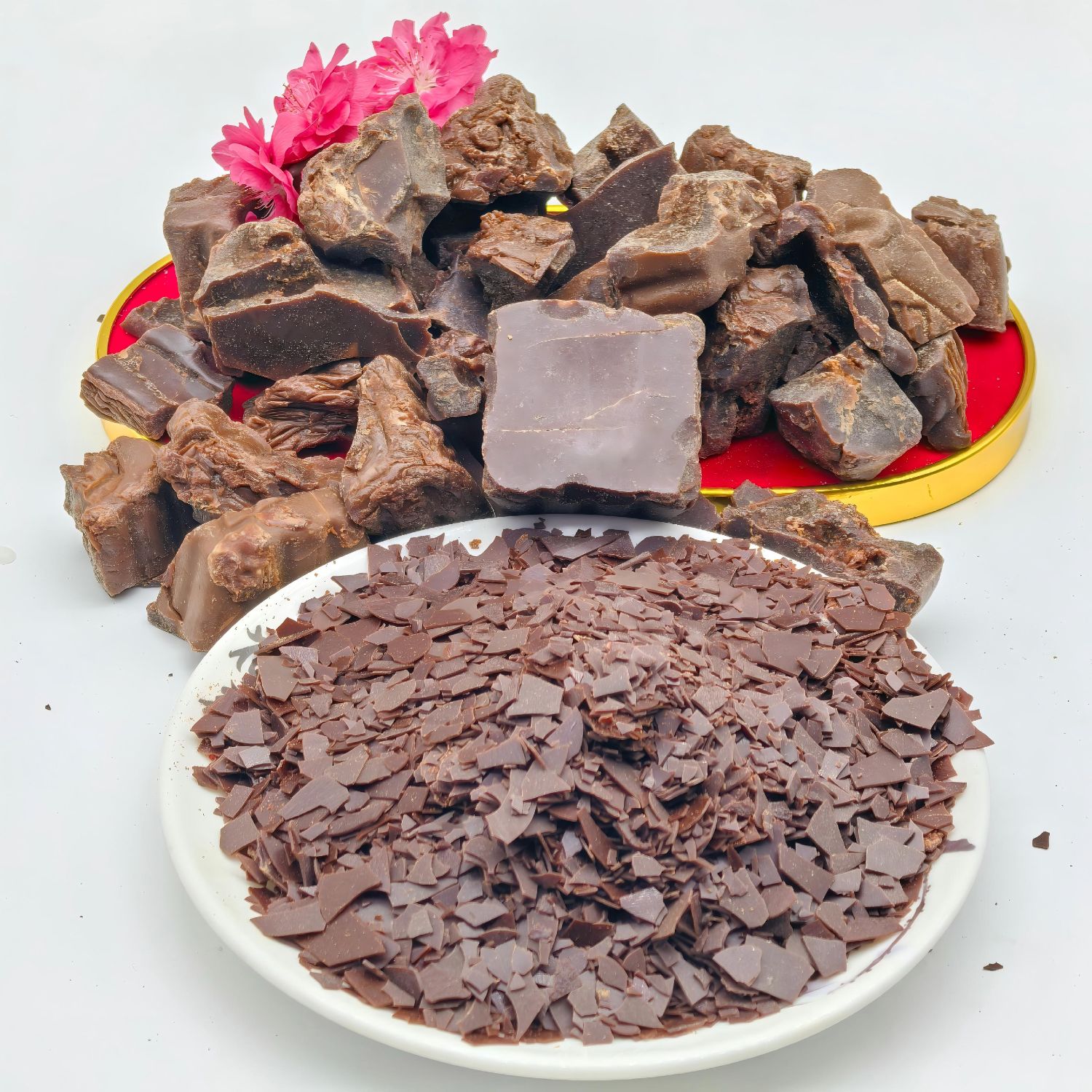
A dependable refiner rarely works with a perfectly uniform feedstock. Color shifts can come from mixed lots or heat exposure, ash levels often reflect mineral contamination, and resin content changes with species or age. Instead of asking only for the final specs, ask how their process reads these inputs and adjusts. Do they rely on inline sensors, routine sampling, or blending strategies to keep output within your tolerance?
For color, experienced operators tend to track yellowness index or L* a* b* values and fine-tune temperatures or additive doses before the material moves downstream. With ash, it helps to know whether they separate fines, wash, or use classification to control inorganic load. Resin variation demands its own kind of attention: too much can cause buildup and discoloration, while too little can change bonding or flow. The answer should sound like a process narrative, not a spec sheet.
Listen for signs that they manage variation through lot planning and feedback loops rather than accepting whatever arrives. If they can explain how they handle a high-resin batch from one supplier and a high-ash batch from another without constant rework, that tells you more than a lab certificate.
Request a Side-by-Side Comparison From Three Recent Production Lots
Rather than settling for a single reference sample, ask the manufacturer to pull retained units from the three most recent production runs and line them up under identical lighting. Seeing them together tends to expose subtle drift in gloss, texture, edge condition, or fit that would go unnoticed when each lot is inspected on its own.
It helps to request that each piece be photographed beside the same approved control sample, with no cropping or color correction between shots. That removes the usual presentation tricks and leaves only genuine variation from lot to lot. You can then judge whether a surface mark or dimensional shift is an isolated event or something that repeats across runs.
Pay less attention to any single flaw and more to the direction of change as the lots progress. When two or three batches move the same way, that often indicates tool wear, a quiet material substitution, or a process setting gradually slipping out of range. The comparison is most useful as a pattern-reading tool, not as a pass-or-fail gallery.
Check Whether the Wax Holds Up Under Your Coating or Polishing Conditions
Wax can behave differently once it sits under a fresh coating or faces the friction of a polishing pad. Instead of assuming it will stay put, run a quick patch test on a lower panel. Apply your usual coating or polish over the waxed area, then watch how water beads and how the surface feels after a wipe-down. If the wax layer turns hazy, loses slickness, or stops shedding water, it is breaking down under those conditions.
Pay attention to the solvents in your coating or polish as well. Some formulas are aggressive enough to soften the wax and drag it across the finish, which shows up as smearing or uneven gloss. If you notice the pad grabbing more than usual or the panel looking cloudy after a pass, the wax probably is not compatible with that step.
For a more reliable result, try to mimic your real working pace and pad pressure rather than testing with a light hand. Heat and repeated passes can pull wax out of the pores and push it around the panel, so a slow machine pass over a warm surface will tell you more than a quick hand rub.
Lock In a Shared Specification Sheet for Every Pallet, Not Just the Pilot Sample
A pilot sample tells you what a supplier can produce when every variable is controlled and the line is watched closely. It does not tell you what will show up on pallet seventeen after a material substitution, a shift change, or a rushed weekend run. Locking a shared specification sheet at the pallet level shifts the conversation from a one-time approval to a repeatable standard. The sheet should call out measurable thresholds—board thickness variance, fastener placement, moisture content, coating thickness, color drift, or anything else that actually affects your operation. If a value cannot be measured with a standard tool, it does not belong on the sheet.
Make the spec sheet part of the receiving ritual, not a document buried in the initial quote. Attach the signed version to the purchase order and require it as a packing slip companion for every delivery. When each pallet is checked against the same dimensions and tolerances, small deviations get caught before they become expensive downstream problems. Suppliers also start treating the spec as a live production target rather than a sales argument. Over time, the pallet-level record gives you a history you can use to spot drift, compare batches, and have sharper conversations with vendors without turning every issue into a negotiation.
Use a Small Pre-Shipment Trial to Catch Drift Before Full Containers Arrive
Running a tiny pre-shipment batch isn't about adding another checkpoint for its own sake. It's the cheapest moment to spot a supplier quietly swapping thread weight, changing the cure time on a coating, or shifting a tolerance by half a millimeter. Once a full container is sealed and on the water, those small drifts are no longer small—they become chargebacks, rework, or a warehouse full of inventory you can't ship.
Keep the trial small enough to move fast but large enough to reveal real variation. A few dozen units pulled from the actual production line, packed the same way they'll travel, and checked against the same drawings or formulas can expose problems that a sample room version never will. The goal isn't to approve a perfect prototype; it's to catch the gap between what was quoted and what the factory is actually capable of repeating at 2 p.m. on a Thursday.
Make the trial meaningful by refusing to treat it as a formality. If the trial passes, lock the reference units in a box and make them the standard for the main run. If it drifts, you've spent a little freight and a few days instead of a season of margin. That's the entire trade-off.
FAQ
Look for tighter control over melting point and oil content, not just a certificate. Reliable suppliers typically share batch-level test results and can walk you through how they handle feedstock variation.
It matters more than most people expect. Ask for samples pulled from three separate production runs rather than a single hand-picked batch. That reveals whether their refining process stays stable over time.
Total landed cost gives a clearer picture. Freight, packaging integrity, customs delays, and rejection rates often outweigh a slightly lower unit price.
Melting point, needle penetration, oil content, and color are the practical checks. The exact targets depend on your application, so give the supplier a clear specification range before quoting.
Request certificates of analysis tied to specific lot numbers, then send a retained sample to an independent lab. A supplier that hesitates on either step usually carries extra risk.
Vague answers about feedstock sourcing, pushback on sharing test methods, or frequent lot-to-lot property swings. Strong suppliers tend to be specific about refining conditions and failure limits.
Not always. Mid-size suppliers sometimes have shorter feedback loops and tighter control over one or two refining lines. Capacity matters less than how well they document and correct process drift.
They let the supplier reserve dedicated feedstock and plan maintenance around your specification. Agree on clear rejection thresholds and periodic quality reviews so the contract doesn't become a reason for complacency.
Conclusion
Consistency in bulk refined Montana wax starts well before the first sample reaches your lab. Ask the supplier to identify the raw wax source and whether feedstock blending shifts between seasons or contracts; a refiner that cannot pinpoint this is often masking variability. Color, ash, and resin content should not be treated as a single averaged number. Request a side-by-side comparison from three recent production lots, preferably using your own coating, polishing, or friction test rather than the refiner's standard panel. Montana wax can look identical under typical specs and still behave differently under heat, solvent load, or buffing speed, so short application-specific trials matter more than a polished certificate.
Once a candidate passes, move the control from a pilot sample to every pallet. A shared specification sheet should include precise test methods, allowable drift for color and ash, and a sampling plan tied to batch or pallet numbers, not just a signed-off initial lot. Before full containers ship, run a small pre-shipment trial drawn from the actual production batch and keep a retained portion for future comparisons. This catches drift while there is still time to adjust or reject without disrupting production. Suppliers that resist this level of transparency often become the source of unexplained quality swings later.
Contact Us
Contact Person: Alan Zhu
Email: [email protected]
Tel/WhatsApp: 8613931838766
Website: https://www.cnxushibeeswax.com