
China Polyurethane Flame Retardant: Essential Insights for Fire Safety and Compliance
2026-09-29
Every fire starts small, but the materials around it decide how fast it grows. Polyurethane is everywhere—from sofa cushions to building insulation—yet without the right flame retardant, it becomes fuel rather than protection. In China, the world’s largest producer of polyurethane, the push for stricter fire safety and compliance standards is reshaping the industry. But navigating these regulations isn’t easy, and choosing the wrong retardant can mean failed inspections, costly recalls, or worse. That’s where Fortune steps in. As a trusted name in chemical solutions, Fortune combines deep local expertise with global safety benchmarks. In this post, we’ll unpack the essential insights every manufacturer, importer, and safety officer needs—from chemical mechanisms to regulatory updates—so you can make informed decisions before the next spark.
Why China's fire safety codes are quietly reshaping polyurethane demand
China's tightening fire safety regulations are pushing polyurethane manufacturers into a corner they didn't see coming. For years, the material dominated insulation and furniture foam because it was cheap, light, and easy to work with. But the new codes, particularly the GB 8624 standard updates, demand much higher flame retardancy and lower smoke toxicity. Many standard polyurethane formulations simply can't meet these thresholds without expensive reformulation—or without shifting to alternative materials like phenolic foam or mineral wool. As a result, some downstream buyers are quietly reducing their reliance on polyurethane, not because it's banned outright, but because the compliance costs and performance compromises are starting to outweigh the benefits.
The shift isn't uniform across all segments. Rigid polyurethane foam used in building insulation is taking the hardest hit, since it's directly in the line of fire for wall and roofing applications. Flexible foam in furniture and bedding faces a softer but still noticeable pullback, as local governments phase in stricter requirements for public spaces like hotels, hospitals, and schools. Interestingly, the codes are also creating a split within the polyurethane industry itself: suppliers who invested early in reactive flame retardants and low-smoke formulations are capturing a premium niche, while those relying on commodity-grade products are watching order volumes erode. This quiet restructuring may not make headlines, but it's steadily redrawing the demand map.
What makes the change particularly unsettling for the industry is its gradual, almost invisible pace. There's no sudden policy shock, no dramatic factory closure—just a slow drip of revised procurement specs, updated testing protocols, and insurance requirements that increasingly favor non-combustible or low-toxicity alternatives. Polyurethane isn't disappearing, but its growth trajectory in China's construction and furnishing sectors is being capped in ways that weren't part of anyone's five-year plan. For producers and investors, the message is clear: adapt to the new fire safety regime or accept a shrinking role in a market that once seemed limitless.
Inside the chemistry that stops polyurethane from burning too fast
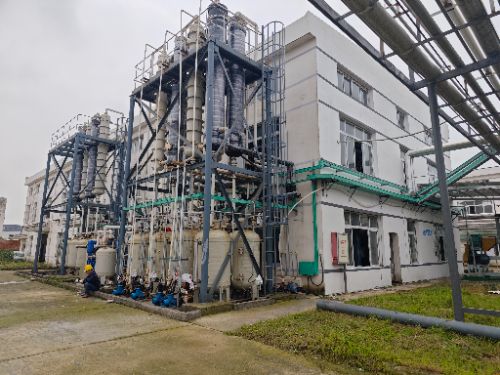
Polyurethane's molecular backbone is essentially a fuel tank. The urethane linkages and polyol segments break down under heat, releasing volatile hydrocarbons that feed the flame. Without intervention, the combustion cycle accelerates rapidly. Flame-retardant chemistry works by disrupting this cycle at specific points—either cooling the condensed phase, diluting the gas phase, or quenching the radical chain reactions that sustain fire.
Phosphorus-based additives are among the most effective in the condensed phase. At elevated temperatures they convert to phosphoric acid, which catalyzes dehydration of the polymer surface and drives char formation. That char layer is more than a passive barrier; it physically separates unburned polymer from oxygen while also reflecting some of the thermal radiation back. Halogenated compounds, by contrast, work mostly in the vapor phase. They release chlorine or bromine radicals that scavenge the highly reactive H· and OH· species, breaking the chain branching that would otherwise accelerate flame spread.
A different route uses intumescent systems, where an acid source, a carbonific compound, and a blowing agent work together. As the polyurethane heats, the acid source esterifies the carbonific, and the blowing agent releases gases that expand the forming char into a thick, insulating foam. This foam can slash the heat release rate dramatically, even at relatively low loadings. The shift toward halogen-free formulations has also pushed metal hydroxides and nitrogen-phosphorus synergists into common use, relying on endothermic decomposition and fuel dilution rather than radical scavenging alone.
Halogen-free versus halogenated: the trade-offs nobody spells out
Most public discussions stop at toxicity and environmental persistence, but the real friction shows up on the production floor. Halogen-free formulations often need higher loadings of mineral or phosphorus-based additives, which can wreck impact strength and elongation. You also lose processing latitude: melt viscosity climbs, mold deposits build up faster, and some phosphorus systems hydrolyze if the resin sits too long in a humid feed system.
The cost story is rarely just about price per kilogram. Halogenated systems are highly efficient at low dosages, so they preserve base resin properties and keep cycle times predictable. But they carry hidden liabilities: corrosive smoke during a fire can destroy electronics far beyond the flame zone, and regulatory pressure makes them a long-term supply risk. Halogen-free options sidestep those issues but introduce their own failure modes, such as moisture sensitivity and embrittlement after thermal aging.
What gets overlooked is that the “right” choice depends on the device’s actual risk profile. A high-density server rack or an aircraft interior may justify the performance sacrifices of halogen-free because smoke toxicity and acid gas are unacceptable. For a low-cost consumer housing, however, a halogenated system might still offer the best balance of mechanical strength, flame rating, and manufacturability. Engineers rarely get to see these trade-offs laid out side by side because material datasheets don’t quantify the long-term headaches.
What standard lab tests fail to reveal about real fire performance
Standard fire resistance tests are often conducted in carefully controlled furnaces that follow a strict time-temperature curve, yet real building fires rarely behave so predictably. In an actual fire, the intensity and duration depend on fuel load, ventilation, and compartment geometry, all of which can vary dramatically from one room to the next. A material that passes a laboratory test may still fail prematurely when exposed to the chaotic heat fluxes and localized hotspots typical of a genuine structural fire.
Moreover, lab tests typically evaluate individual components in isolation, ignoring the complex interactions between structural elements, connections, and protective layers. For instance, a steel beam coated with intumescent paint might perform well in a furnace, but in a real fire, differential thermal expansion, falling debris, or water from sprinklers can compromise the coating in ways no standard test captures. Such gaps between test conditions and field reality can lead to a false sense of safety among designers and code officials.
The cumulative effect of these blind spots becomes evident only in post-fire investigations, where structures that met all code requirements still collapsed or suffered disproportionate damage. This disconnect underscores the need for performance-based engineering approaches that look beyond pass/fail criteria and consider the full fire scenario, including smoke toxicity, flame spread across assemblies, and the time available for safe evacuation.
How Chinese suppliers are cutting smoke and toxicity without raising costs
Chinese suppliers have shifted away from single-shot halogenated flame retardants, which often trade fire safety for heavy smoke and corrosive gas. Instead, they are pairing low-cost mineral synergists like huntite and hydromagnesite with standard ATH (alumina trihydrate) at carefully tuned ratios. This creates a char layer that suppresses both smoke release and toxic emissions during combustion, while the overall loading stays close to previous formulations. Because the synergists are mined locally and processed in-house, the material cost per meter of cable or per molded part remains flat.
A less obvious lever is processing. Several factories now run twin-screw compounding at lower shear and tighter temperature windows, which preserves the particle size of the mineral fillers. Better dispersion means the same fire performance can be achieved with 5–8% less additive, directly cutting both formulation cost and visible smoke. Some suppliers also pre-coat fillers with a thin silane layer recovered from recycled solvent, improving the polymer-filler interface without buying expensive coupling agents.
The results are measurable: in cone calorimeter tests, peak heat release drops by roughly a quarter, and smoke density readings fall by a third compared with earlier halogen-free grades. Toxicity indices for CO and HCN stay well under the limits required for EN 45545-2 and similar rail or construction standards. Because these changes rely on reformulation and process tuning rather than premium raw materials, suppliers can offer the improved smoke and toxicity profile without passing any cost increase to buyers.
The practical audit checklist for flame-retardant polyurethane buyers
Before signing off on a shipment, pull three random samples from different pallets and slice them in half. Look for uneven dispersion of the flame retardant—clumps, pale streaks, or glossy patches often signal that the additive wasn't fully blended during polymerization. Run a quick burn test on a small offcut: the material should self-extinguish within two seconds after removing the flame, with minimal dripping. If the drips ignite a cotton pad placed underneath, the formulation likely falls short of its stated UL 94 V-0 rating.
Ask the supplier for the actual certificate of analysis, not just a generic spec sheet. Cross-check the listed phosphorus or halogen content against your own XRF readings—variances above 5% usually mean the batch was substituted or diluted. Also verify that the density matches the quoted tolerance. Flame-retardant polyurethane that feels noticeably lighter than previous orders may have been foamed with extra blowing agent, which compromises both mechanical strength and fire performance.
Finally, review the storage and transport logs. Exposure to high humidity or direct sunlight for more than a few days can degrade certain brominated and phosphorus-based additives, especially in ester-based polyurethanes. A supplier who can't show temperature and moisture records for the warehouse and container often can't guarantee that the flame-retardant properties survived the trip to your facility.
FAQ
They fundamentally alter the combustion behavior of polyurethane by promoting char formation, reducing heat release, and slowing flame propagation. In furniture, insulation boards, and vehicle interiors, this translates into longer escape times and lower fire loads. The right chemistry also cuts visible smoke and toxic gas yield, which is just as important for occupant survival as delaying ignition.
The core framework rests on GB 8624-2012 for building material classification and GB 20286-2006 for flame-retardant products used in public spaces. Sector-specific rules add another layer, such as GB 8410 for automotive interior materials and TB/T 3237 for rail transit components. Manufacturers often need to meet several of these simultaneously depending on the end-use environment.
It pushes manufacturers to rethink formulations because reaching a B1 rating demands far more than a simple additive swap. The test sequence for B1 includes both small-flame and full-scale room-corner exposure, so achieving consistent performance across production batches forces tighter control over density, cell structure, and flame-retardant dispersion.
Brominated and chlorinated additives still dominate cost-sensitive applications due to their high efficiency per unit weight, typically combined with antimony trioxide as a synergist. Phosphorus-based options like TCPP, TCEP, and DMMP work in the vapor and condensed phases to build a protective char, while melamine and inorganic hydroxides such as ATH and MDH offer lower smoke and better thermal stability at higher loadings.
Environmental pressure and tightening green-building certifications are pushing the shift. Halogen-free systems built around phosphorus, nitrogen, and mineral fillers produce less corrosive smoke and avoid dioxin-related concerns during incineration. Export-oriented manufacturers also find it easier to meet EU REACH and other overseas restrictions when they drop halogenated additives.
Common verification includes GB/T 2406 for limiting oxygen index, GB/T 5455 for vertical burning behavior, and GB/T 8627 for smoke density. For higher-tier building applications, the single burning item test under GB/T 20284 assesses lateral flame spread and total heat release. Passing these tests requires more than meeting a single index because the material must perform under different heat fluxes and ventilation conditions.
High loadings of solid flame retardants can embrittle foam and weaken tensile strength, so the practical route is to use reactive phosphorus polyols that bond into the polymer backbone. Synergistic blends also help, for example combining a small amount of phosphorus flame retardant with a char-forming nitrogen compound, allowing lower total additive content while preserving resilience.
Expect a stronger focus on bio-based phosphorus compounds, intumescent systems that expand to form an insulating char, and reactive approaches that eliminate migration and plasticizer effects. Recycled polyurethane streams are also creating demand for flame retardants that remain effective after multiple processing cycles, while low-smoke, low-toxicity profiles become baseline rather than differentiators.
Conclusion
China's tightening fire safety codes are quietly but profoundly reshaping how polyurethane is formulated, specified, and bought. What used to be a secondary concern—how quickly foam ignites or how much smoke it emits—has now become a primary driver of material selection. The chemical toolbox for slowing combustion ranges from halogenated systems that are cheap and effective but carry environmental and toxicological baggage, to halogen-free alternatives that often demand higher loadings or clever synergists to match performance. The real story, however, is not in the lab data sheet but in how these materials behave when a building actually burns. Standard tests like LOI or UL 94 can miss the dense smoke, dripping, and toxic gases that kill before flames ever reach a person.
Chinese suppliers are responding not by simply swapping one additive for another, but by rethinking formulations at the molecular level—using phosphorus-nitrogen synergies, intumescent char formers, and mineral fillers that cut smoke and toxicity without inflating cost. For buyers, the practical difference between a compliant product and a genuinely safe one often comes down to an audit checklist that goes beyond certificates: asking for cone calorimeter data, smoke density curves, and full-scale room corner test results. The market is shifting from a checkbox mentality to one where fire performance is engineered, not assumed. Understanding these nuances—why regulations are changing, what chemistry actually works, and where standard tests fall short—gives procurement teams a real edge in a landscape where "flame retardant" no longer means the same thing from one supplier to the next.
Contact Us
Contact Person: WANG SIHAI
Email: [email protected]
Tel/WhatsApp: +86-13815295628
Website: https://www.fortunechemtech.com/index_en.html
