
Leading Exhibition for Chemical Safety & Environmental Protection: Exploring Innovations and Best Practices
2026-10-02
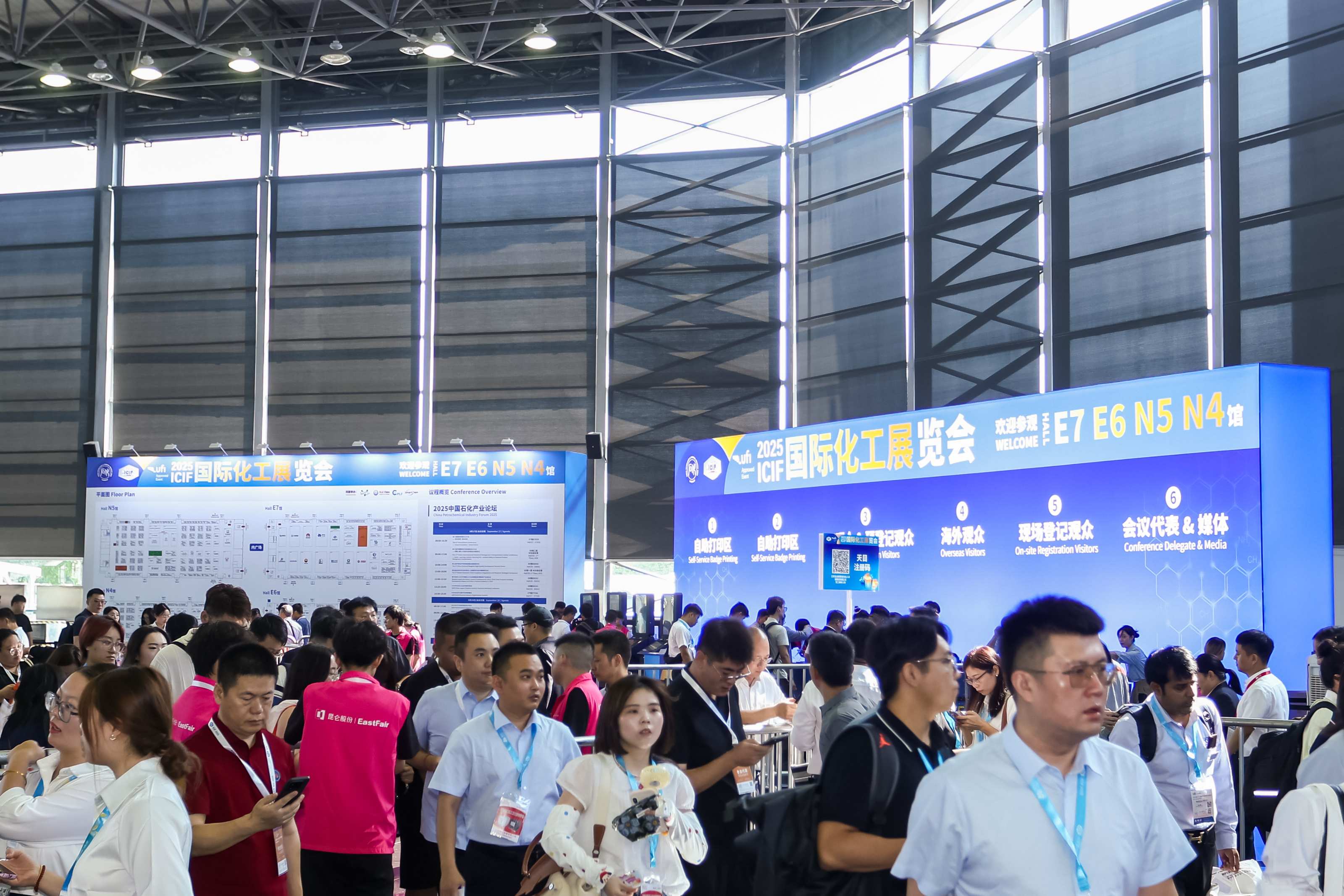
Every year, chemical incidents remind us that safety and environmental protection are not just compliance checkboxes—they are the pulse of a resilient industry. At ICIF, the leading exhibition for chemical safety and environmental protection, we don't just showcase products; we surface the unexpected innovations and hard-won best practices that keep people, plants, and ecosystems safe. From novel leak-detection materials to circular wastewater strategies, this year's floor is a live map of where the industry is headed—and where it still stumbles. In the articles ahead, we dive into the ideas and case studies that challenge the status quo, so you can walk away with more than a badge scan.
Live Demos That Make Safety Protocols Feel Urgent and Real
A fire extinguisher training video can list steps all day, but nothing cuts through complacency like standing three feet from a controlled blaze and feeling the heat push against your face. Live demos strip safety protocols from the page and drop them into your nervous system. When an instructor deliberately trips a table saw's flesh-sensing brake using a hot dog, the silence that follows is louder than any bullet-point warning. That sudden stop, the intact casing, the realization of what could have been—it lands in the gut, not just the head.
The urgency comes from unpredictability. In a staged chemical spill response, the technician fumbles a seal, and the room tenses. That tiny real-time error, unscripted and quickly corrected, teaches more about pressure than a dozen perfect rehearsals. People remember the catch in the presenter's voice, the split-second hesitation, the way everyone instinctively stepped back. Those micro-moments are impossible to fabricate in text or animation. They make the risk feel intimate.
Practical grip matters more than spectacle. A good live demo doesn't just show what to do; it shows what happens when you don't—using real tools, real delays, real consequences. A locked-out electrical panel that still arcs because someone bypassed a breaker? That crack and flash will be replayed in memory every time a worker reaches for a switch. Safety stops being a poster on the wall. It becomes a physical truth you've seen with your own eyes.
The Quiet Revolution in Emissions Monitoring and Control
Across industrial corridors and urban airsheds, a subtle but consequential shift is underway. Regulatory pressure and falling sensor costs have pushed emissions monitoring out of the fixed-station era and into a distributed mesh of low-cost optical analyzers, drone-mounted sniffers, and satellite-based methane trackers. The result is not just better data, but a different kind of relationship between operators and their releases: one where leaks are found in hours instead of quarterly walkthroughs, and where control systems adjust burners or scrubbers before a permit limit is even approached.
What makes this change feel quiet is its integration into everyday operations rather than headline-grabbing mandates. Continuous fenceline monitoring, paired with predictive dispersion models, now lets plant managers see the real-time fingerprint of their emissions under shifting winds. Meanwhile, automated valves and AI-tuned combustion controls respond to that data without human intervention, trimming nitrous oxides and volatile organic compounds at the margins. The work is incremental, but cumulatively it has moved many facilities from reporting what happened last month to steering what happens next.
Yet the deeper revolution may be cultural. With much of the monitoring now passive and ambient, regulators and communities can access the same readings as the control room, turning compliance from a periodic filing into an ongoing, observable practice. This transparency has begun to reshape internal workflows: maintenance schedules are driven by sensor drift as much as by calendar, and control loop tuning becomes a continuous improvement task rather than a startup chore. In that sense, the technology has stopped being a compliance add-on and started functioning as the nervous system of the plant itself.
When Regulators and Plant Managers Share the Same Stage
When regulators and plant managers share the same stage, the usual distance between a compliance check and a production shift disappears. Both sides stop being just a set of initials on a report. They have to answer the same questions in front of the same audience, and that makes the unspoken assumptions harder to hide. One side arrives with a rulebook and a list of past violations; the other arrives with maintenance logs, staffing shortages, and a worn-out pump that cannot be taken offline without upsetting the whole line. What gets said from the stage usually matters less than what gets revealed: which risks each side considers acceptable, and which ones they have learned to quietly tolerate.
This kind of shared appearance often turns into an accidental negotiation over language. A regulator may talk about failure probability curves and inspection intervals. A plant manager may talk about vibration readings at three in the morning and the sound a bearing makes before it seizes. When those two ways of describing the same machine collide in front of an audience, the gap becomes visible. The best moments happen when neither person retreats into jargon. One might ask what the other would fix if there were only one extra maintenance shift this week. The other might ask what specific failure keeps a regulator awake the night before an audit. That exchange forces both to convert abstract categories into real consequences.
The real value is rarely in the prepared slides. It sits in the pauses, the offhand comments, and the small corrections one speaker makes about the other's assumptions. For plant staff in the audience, the event shows whether their managers actually understand the floor-level risks or only rehearse answers for inspectors. For regulators, it tests whether the rules they enforce still match the physical limits of an aging plant. When both walk off the stage with a clearer picture of each other's constraints, the shared appearance has already done more than a stack of formal correspondence ever could.
Small Fixes, Big Impact: Case Studies from the Exhibition Floor
At first glance, the adjustments on display seemed almost too minor to matter—a redesigned bracket here, a slightly thicker gasket there, a repositioned sensor. Yet walking the exhibition floor, it became clear that these small fixes were quietly solving problems that had frustrated users for years. One booth showed how adding a single drainage groove to a floor panel reduced slip incidents by nearly a third, without changing the overall look or cost. Another demonstrated a redesigned latch that ended the chronic jamming reported in older models. None of these changes required new technology; they simply required someone to listen closely to what the equipment was already trying to say.
The real story, though, was not in the parts themselves but in the process behind them. Exhibitors described how they had gathered feedback from maintenance crews, line operators, and even end-users, then fed those observations directly into design tweaks. In one case, a manufacturer of warehouse shelving added a subtle lip to the beam ends after footage showed workers wasting seconds aligning each load. The result was faster assembly and fewer damaged goods—no headline-grabbing innovation, just a better fit for the daily grind. A similar pattern emerged with a pump manufacturer that swapped a single O-ring material after analyzing hundreds of field returns. The new ring cost pennies more, but it doubled the service interval.
These case studies remind us that impact is not always proportional to the size of the change. On a crowded exhibition floor, where giants tout AI-driven everything and modular platforms promise revolution, the most honest booths were often the ones showing a before-and-after photo of a wear point. A redesigned wear strip here, a chamfered edge there—each one solved a specific failure, reduced a call to support, or kept a machine running through a third shift. The lesson is simple: big improvements often come disguised as small fixes, waiting for someone to notice that a little geometry can carry a heavy load.
Rethinking Hazard Labels Beyond the Standard Diamond
The conventional diamond-shaped hazard label has served as a universal shorthand for decades, but its fixed geometry and limited icon set often fail to capture the real-world complexity of chemical risks. A single flame or skull symbol may signal danger, yet it leaves little room for nuance about exposure routes, chronic effects, or appropriate emergency response. Workers in fast-paced environments can also fall into symbol fatigue, where repeated exposure to identical warning shapes dulls the intended alertness.
A more effective approach might blend visual hierarchy with plain-language cues. Instead of relying solely on abstract pictograms, labels could incorporate short action phrases like "avoid water contact" or "use ventilation" directly beside the icon. Color psychology can play a stronger role as well: shifting from static red borders to gradient backgrounds that indicate severity levels, or using a secondary accent color to distinguish between acute and long-term hazards. Such tweaks respect existing training while adding immediate, context-specific guidance.
Beyond static redesigns, dynamic or layered labels open new possibilities. Imagine a label that changes contrast based on ambient light or includes a QR-like pattern linking to a mobile-friendly hazard summary with real-time safety data. However, any departure from the familiar diamond must pass rigorous usability testing across languages and literacy levels. The goal is not to abandon a proven symbol but to make it the entry point to a richer, more adaptive warning system that keeps human behavior at the center.
Why Cross-Industry Alliances Are Reshaping Environmental Compliance
Environmental rules no longer stop at a factory fence. A single product often weaves through suppliers in chemicals, textiles, logistics, and electronics before it reaches a shelf. When one sector misses a compliance signal, the ripple effects hit partners that had nothing to do with the original violation. Cross-industry alliances give those partners a shared early-warning system—one that flags shifting regulations, audits, and enforcement trends before they become expensive surprises.
There is also a quieter math at work. No single company can afford to track every carbon accounting standard, packaging directive, or due-diligence law across dozens of jurisdictions. Alliances pool that monitoring burden and let members borrow each other's compliance infrastructure. The result is less duplication, faster adaptation, and a stronger collective voice when regulators ask for input—turning what used to be a competitive secret into a common operating layer.
FAQ
Teams managing industrial compliance, plant safety, waste treatment, and sustainability reporting will likely get the most out of it, especially mid-level specialists looking for upgrades that can be justified to leadership.
Instead of only product booths, the schedule pairs live demonstrations with closed-door roundtables where operators and regulators compare notes on recent incidents. That mix makes it feel less like a sales floor and more like a working forum.
Yes, several zones are set up for hands-on trials, from spill containment systems to gas detection wearables. Vendors staff these areas with technical engineers, not just sales representatives, so questions about maintenance and calibration get answered directly.
The program includes updates on enforcement trends, but the focus is on practical compliance paths: how facilities are adjusting documentation, training routines, and audit readiness without overloading internal teams.
Roughly half the track covers pollution prevention, circular material use, emissions monitoring, and water treatment. It is structured so the same project team can split up and cover more ground.
Expect early-stage tools like sensor networks for real-time leak detection, low-energy solvent recovery units, and AI-assisted incident reporting. Many are shown as pilot projects with field data rather than polished final products.
Several sessions use structured peer exchange: attendees submit anonymized case issues beforehand, and facilitators guide small groups through possible responses. It's one of the few formats where facility managers openly discuss near misses.
If you're looking purely for procurement discounts or a large-scale public expo, it may feel too focused. The value comes from technical depth and candid exchange, not from collecting giveaways.
Conclusion
Walking through the exhibition halls, it becomes clear that chemical safety is no longer a set of static rules but a living, breathing practice. Live demonstrations put visitors inside simulated leaks and equipment failures, making the urgency of proper protocols impossible to ignore. At the same time, a quieter shift is underway in emissions monitoring: sensors and data platforms that once required specialized interpretation now offer real-time, plant-level feedback, turning compliance from a periodic checkpoint into an everyday habit. Notably, regulators and plant managers appear side by side in panel discussions, moving past old adversarial dynamics to jointly troubleshoot real operational challenges.
The smaller stories are just as compelling. Case studies from the floor show how minor adjustments—repositioning a sensor, simplifying a lockout procedure—have prevented major incidents. Hazard communication is also being rethought beyond the familiar diamond, with new labels tested for clarity across languages and literacy levels. Perhaps the most surprising development is the rise of cross-industry alliances: chemical producers, logistics firms, and even tech startups are pooling data and best practices, reshaping environmental compliance into a shared responsibility rather than a box-ticking exercise. The exhibition ultimately argues that lasting safety and environmental protection come from practical, collaborative innovation, not just regulatory pressure.
Contact Us
Contact Person: Shaozhen Zhou
Email: [email protected]
Tel/WhatsApp: 0086-18612117599
Website: https://en.icif.cn/