ODM Sunscreen Spray Supplier for High-Performance Custom SPF Products
2026-09-23
Sun care is evolving fast—consumers expect high SPF, a weightless finish, and skin-loving ingredients, all in one spray. If your brand is ready to launch a product that checks every box, the right ODM partner makes all the difference. Wilson crafts high-performance custom sunscreen sprays, turning complex formulations into everyday essentials your customers will reach for again and again.
Beyond Basic SPF: Custom Complexes for Real Skin
Most sunscreens stop at broad-spectrum coverage and call it a day, but that approach ignores how differently skin behaves under UV exposure depending on its own lipid barrier, sensitivity level, and even the humidity around you. Custom complexes start with a base of photostable filters—often pairing zinc oxide with newer encapsulated organics—and then layer in actives chosen for what your skin actually struggles with during daylight hours. For someone prone to redness, that might mean adding centella asiatica or a low-dose niacinamide; for oily skin, it could be a silica-based mattifier that doesn't pill under makeup.
That level of adjustment also changes the feel of the product. Instead of the heavy, one-texture-fits-all lotion that leaves a white cast or turns greasy by noon, a custom formula can be dialed toward a thin milk, a velvety cream, or a clear gel depending on how much sebum you produce and whether you layer it over a vitamin C serum. The filters themselves get selected for compatibility—some zinc oxide grades blend more easily into deeper skin tones than others, and certain chemical filters are less likely to sting eyes if you sweat or swim.
What makes this more than a niche idea is that the adjustments are practical, not decorative. A custom SPF can lower the chance you'll skip sunscreen simply because you hate how it feels, and that consistency matters more in the long run than chasing the highest possible SPF number. It also lets you avoid known triggers—fragrance, avobenzone, certain alcohols—without having to compromise on UVA protection or water resistance.
Spray Technology That Delivers Even Coverage
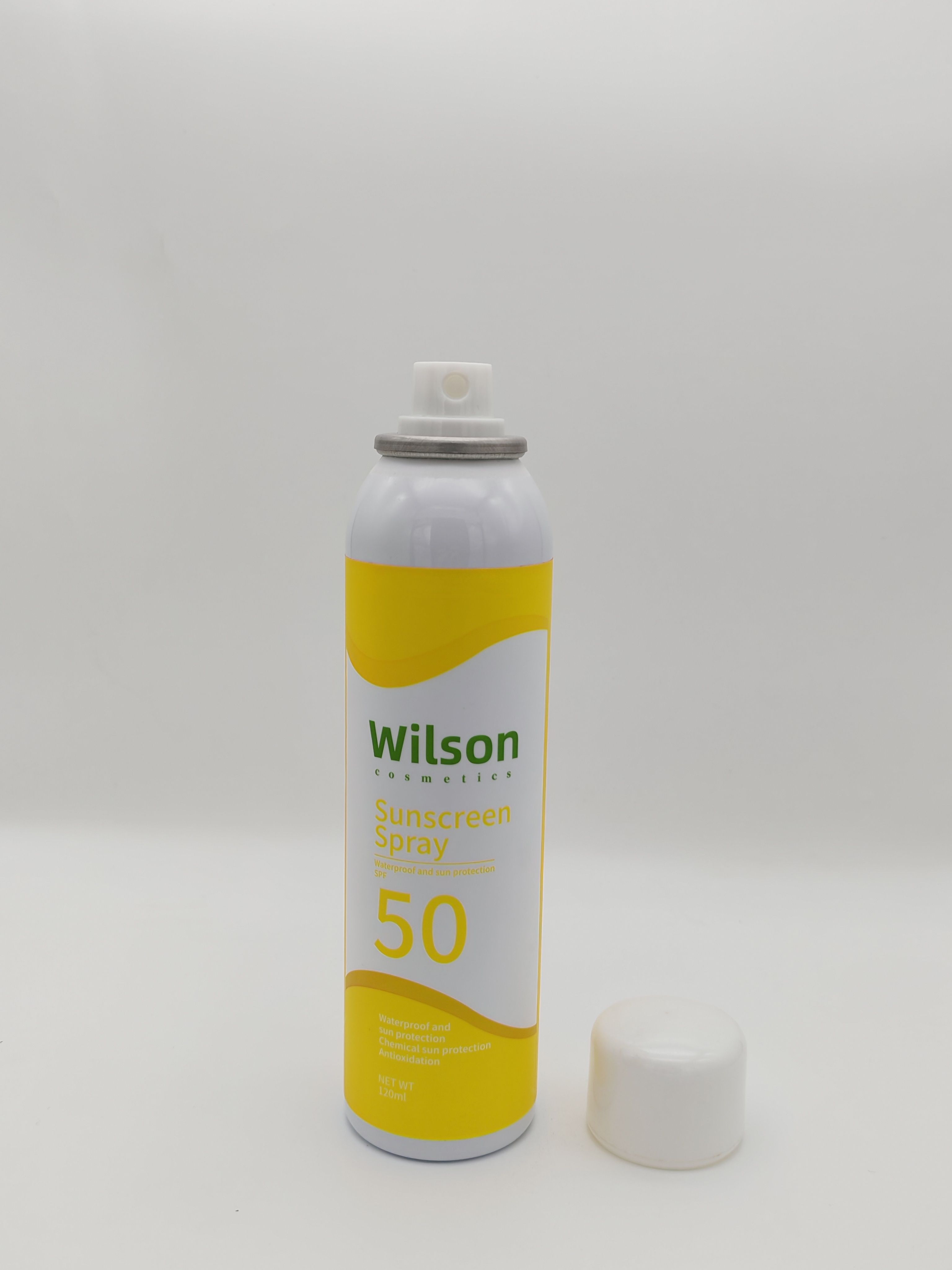
Most sprayers fail in the last inch—the moment liquid leaves the nozzle. This system uses a precision-machined tip and a narrower internal channel to keep droplet size consistent, so the pattern stays uniform from the first trigger pull to the last. You will notice it most on tall plants or tight corners where thin, patchy mist usually forces a second pass.
Pressure control matters more than raw power. Instead of a sudden pump-and-blast cycle, the head builds and holds a steady 2.1-bar output, which flattens the fan shape and prevents droplets from clustering on leaf edges. The result is a soft but dense coat that sits on stems and the undersides of leaves without running off.
Coverage also depends on how the nozzle angle meets the plant. The swivel head locks into three positions, letting you spray upward into canopies or downward into soil without tilting the tank. That means the same even layer lands whether you are working a hanging basket or a low row of seedlings.
From Concept to Filled Bottles in Weeks, Not Months
Most packaging suppliers talk in quarters and calendar years when you ask about lead times. The standard journey from initial sketch to a filled bottle sitting on a shelf often drags past six months, sometimes longer if tooling needs adjustments or a supplier misses a handoff. We built our process around a different clock. By keeping mold fabrication, material sourcing, and filling validation under one roof, the longest wait you'll face is measured in weeks, not seasons.
The speed comes from overlapping stages that traditionally run in sequence. Instead of waiting for a final 3D render before starting mold design, our engineers work from a shared master file that updates in real time. A change to the neck finish or a tweak in wall thickness flows instantly to the tooling team. We also maintain a pre-qualified library of resins, liners, and closure systems, so we're not testing compatibility from zero on every project. That removes the hidden weeks of back-and-forth emails and spec sheets.
What does this mean for your launch calendar? You can approve a concept on Monday, see sample bottles by the end of the month, and have production quantities filled and palletized before a traditional supplier would have shipped their first prototype. This isn't about cutting corners; it's about cutting idle time. Fewer handoffs, fewer approval loops, and a team that treats your deadline as the primary specification.
Sunscreen Formulas That Survive Sweat and Water
Most sunscreens start to slide the moment you break a sweat, leaving uneven coverage that's worse than no coverage at all. The formulas that actually hold up tend to rely on flexible film-forming polymers that grip skin without suffocating it, so the protection doesn't pool in your eyes or wash off in the first ten minutes of a swim.
Water resistance on the label isn't a marketing shortcut if the formula is built around emollient esters and waxes that disperse evenly and reset after toweling. What you're really looking for is a sunscreen that dries down fast but re-spreads just enough to fill the microscopic gaps caused by rubbing, salt, and chlorine. If it feels too greasy at first, that's often a sign it's prioritizing slip over staying power; the best sweat-proof options have a slightly tacky finish that fades within a minute.
Application still matters more than any ingredient list. Rubbing a water-resistant sunscreen into damp skin or spreading it too thin defeats the entire point. For long days outside, put on a base layer before you start moving, give it a few minutes to set, and reapply only after actual exposure, not out of habit. That kind of routine is the real reason some formulas survive sweat and water while others vanish by noon.
Small Runs, Big Ambitions: Scaling Without Sacrifice
Choosing to start with small production runs isn't a limitation—it's a deliberate posture. It lets you test real demand, refine the product based on actual feedback, and keep capital from being locked in unsold inventory. Many brands assume growth means immediately chasing massive volume, but that path often forces compromises in materials, labor conditions, or design integrity before the market has even validated your idea.
The trick is to treat each small batch as a data-gathering mission, not a cost center. When you scale from that foundation, you're expanding what already works rather than blindly inflating numbers. This approach keeps your production nimble: you can shift fabrics, tweak sizing, or adjust colorways without being stuck with warehouses of a version nobody wanted. Ambition stays intact—it just gets smarter, feeding on incremental wins instead of risky leaps.
Scaling without sacrifice also means keeping the core ethos intact as orders grow. Partnerships with local workshops, careful sourcing, and hands-on quality checks don't have to disappear when volume rises. They just need systems that scale alongside you. The goal isn't to become a faceless giant, but to prove that doing things properly at a small scale can be the blueprint for doing them properly at a large one.
Private Label Partnerships Built on Transparency
Most private label deals start with a handshake and a pile of unspoken assumptions. The manufacturer guards its margins, the retailer guards its shelf space, and both sides wonder what the other is hiding. Real transparency flips that script. It means opening the books on raw material costs, sharing production timelines down to the week, and admitting when a batch falls short of spec before it ships. That kind of candor is rare, but it's the only foundation that survives a supply chain hiccup or a sudden demand spike.
When a retailer and manufacturer agree to share real-time inventory data and cost breakdowns, the relationship shifts from transactional to strategic. A factory that knows a retailer's holiday forecast can lock in packaging materials early and avoid rush fees. A retailer that sees the true cost of organic vanilla extract understands why a price increase isn't a cash grab. These conversations aren't always comfortable, but they replace guesswork with a shared plan. Disputes over chargebacks and quality claims drop because both parties are working from the same numbers.
The payoff shows up in the product itself. A transparent partnership can move from concept to shelf in half the usual time because no one is hiding a formulation change or a shipping delay. Shoppers may never see the spreadsheets, but they taste the difference in a recipe that wasn't quietly downgraded to hit a margin target. For brands that get this right, 'private label' stops meaning 'cheaper copy' and starts meaning 'the version we'd make for ourselves.'
FAQ
We focus on dry-touch sprays that stay put during sweat and water exposure. Our lab uses film-forming polymers and encapsulated UV filters to maintain SPF integrity after 80 minutes of water immersion, and we can adjust the finish from matte to dewy depending on the target activity.
Yes, we formulate with micronized zinc oxide and advanced chemical filters like Tinosorb S and Uvinul A Plus to reach SPF 50+ PA++++ while keeping viscosity low enough for a fine, even mist. The sprays absorb quickly and don't leave a white cast on most skin tones.
We supply continuous-spray bag-on-valve cans, standard aluminum aerosol cans, and non-aerosol pump sprays. You can choose actuator designs, can diameters, and printing finishes—matte, soft-touch, or metallic—to match your brand's look.
We maintain a library of compliant UV filters for regions like the US FDA, EU Cosmetics Regulation, ASEAN, and China. Before production, our regulatory team reviews your target market and adjusts the formula to use only permitted filters, then supports you with stability and safety testing documentation.
For standard stock formulas with your label, MOQ starts at 5,000 units. For fully custom formulations, including new fragrance, texture, or active combination, the MOQ is usually 10,000 to 20,000 units depending on packaging complexity.
Yes, we have several mineral-only and biodegradable base formulas free from oxybenzone and octinoxate. We can also add skin-soothing ingredients like bisabolol, allantoin, or panthenol, and run patch tests or hypoallergenic claims through partner labs.
After you approve the final sample, bulk production typically takes 35 to 50 days, including filling, labeling, and packaging. If you need a faster turnaround, we can expedite to about 25 days for repeat formulas with existing packaging components.
We conduct preliminary in-vitro SPF and water resistance tests in our lab during development. For final label claims, we coordinate with ISO-accredited third-party labs for in-vivo SPF, UVA, critical wavelength, and photostability testing, and we share the full reports with you.
Conclusion
Finding a manufacturing partner that treats sunscreen as more than a commodity is rare. This ODM supplier builds each SPF spray around the actual demands of skin—whether that means pairing UV filters with niacinamide for reactive complexions or adding antioxidants that hold up under midday heat. Instead of off-the-shelf bases, the lab works from a matrix of emollients and film-formers, adjusting texture and finish until the mist disappears into skin without a greasy trace. The spray hardware receives just as much attention: nozzle geometry and propellant ratios are tuned so each pass deposits a uniform, fine layer, eliminating patchy coverage at the hairline and shoulders.
Speed does not come at the cost of rigor. A concept can move from brief to filled bottles in a handful of weeks because the formulation library and packaging supply chain are already pre-vetted, yet every batch still goes through stability and water-resistance testing that simulates 80-minute swims and heavy perspiration. Smaller brands are not pushed toward inflated minimums; production lines are set up to run modest quantities without changing the unit economics. Throughout the process, the supplier shares documentation, raw material sources, and test results openly, so founders can make informed claims about their products and grow a private label line that feels engineered, not borrowed.
Contact Us
Contact Person: Simon
Email: [email protected]
Tel/WhatsApp: +86 13267966849
Website: https://www.wilsoncosmetic.com