Why China Fine Chemicals Are Redefining Global Specialty Chemical Standards
2026-08-20
Talk to a specialty chemical buyer about China and you'll hear a familiar story: low prices, patchy quality, and a supply chain kept at arm's length. That story is falling apart. China's best fine chemical producers now pair advanced process control with exacting purity profiles, outperforming legacy Western benchmarks in complex intermediates and high-performance additives. DSL Chemicals sits inside this shift, where tighter specifications, cleaner production, and faster scale-up have become the baseline, not the exception. What follows is a look at how China is rewriting the global rulebook for specialty chemicals—and why your sourcing strategy may need a serious update.
China's Fine Chemical Leap Beyond Old Assumptions
For a long time, the standard assumption was that Chinese fine chemical plants could manage simple chlorinations and esterifications, but would struggle with anything requiring precise temperature control, exotic reagents, or complex work-ups. That line no longer holds. Producers around Nanjing and Shanghai have added large-scale continuous flow reactors for nitration, ozonolysis, and other reactions that are difficult to run safely in a batch vessel. It is not uncommon now to see Chinese CROs and CDMOs quoting 8- to 12-step syntheses with chiral resolution, cryogenic lithiation, and fluorination as routine services, often with shorter lead times than European counterparts.
What changed is less about cheap labor and more about disciplined investment. Many plants upgraded from open manual operations to closed-loop process control, real-time analytics, and waste treatment systems that meet current environmental enforcement. This allows them to produce high-purity materials—electronic-grade solvents, OLED intermediates, and fluorinated electrolyte additives—that demand impurity levels below 10 ppm for certain metals. Western buyers still worry about IP leakage, and smaller workshops can be uneven. But the old assumption that China only does low-end, high-volume fine chemicals is outdated. The shift is already visible in procurement patterns for agrochemical and pharmaceutical intermediates, where Chinese suppliers now win bids not just on price but on demonstrated technical capability.
The Purity Problem Chinese Labs Quietly Solved
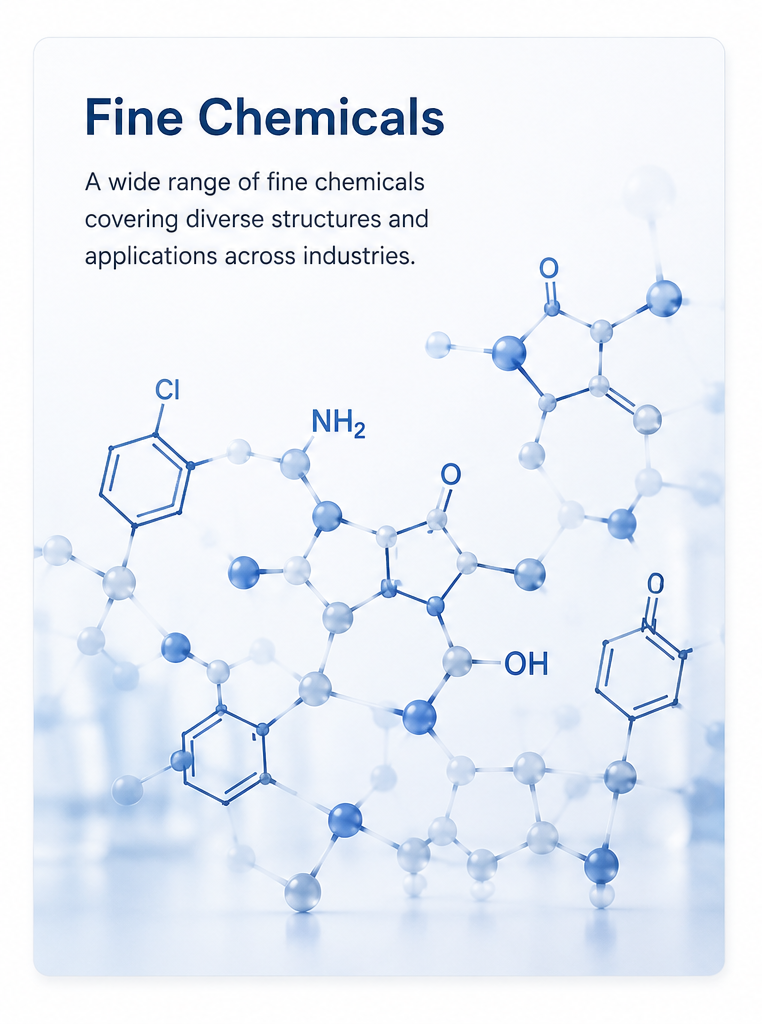
For a long time, high-purity reagents in analytical chemistry had a quiet flaw: trace metal contamination that drifted just below the threshold of older detection methods.
Rather than treating purification as a one-off cleanup step, several Chinese labs rebuilt the whole supply chain, from raw material sourcing to final packaging, under tighter environmental controls.
The result was a jump in batch-to-batch consistency that let them run longer sequencing and spectrometry sessions without the usual background drift, a fix that spread through word of mouth instead of press releases.
Where Specialty Chemical Innovation Is Actually Happening
The tired narrative that big corporate labs drive specialty chemical breakthroughs has not matched reality for at least a decade. Instead, the most consequential work is emerging from small pilot plants tucked into industrial parks in places like Geismar, Louisiana, or Ludwigshafen's overlooked outer rings—not the glossy R&D headquarters. These facilities run continuous micro-batches, tweaking catalysts under conditions no academic paper would survive, and their operators rarely publish. The silence hides a pattern: new fluoropolymers for battery separators, non-PFAS surfactant blends for semiconductor cleaning, and biodegradable chelating agents for textile dyeing all moved from bench to commercial scale in such settings within two to three years, far faster than the industry average.
A second, less visible node is university-affiliated incubators that lease space inside decommissioned agrochemical plants. Here the partnership is not theoretical—graduate students operate alongside retired plant engineers, and failed scale-ups are treated as useful data rather than stigmas. One such site in northern Ohio recently yielded a lignin-based curing agent for epoxy resins that matches bisphenol-A performance without the endocrine disruption concerns. The key differentiator is speed of iteration: because the equipment is already dirty, already calibrated for corrosive intermediates, a three-day trial costs less than a single day in a pristine pilot hall. That economic pressure filters out vanity projects and leaves only chemistries that solve a persistent formulation problem.
Equally telling is where innovation does not happen. Traditional university laboratories, despite their publication volume, increasingly serve as upstream idea generators rather than scale-up partners. The gap between an exciting new organometallic route and a stable, safe, economically viable process remains vast, and few academic groups have the patience or funding to cross it. Meanwhile, contract research organizations that once dominated specialty chemical development have shifted toward regulatory testing and away from true process chemistry. The centers of gravity are now small, owner-operated toll manufacturers that co-develop formulations with end users under strict confidentiality, and regional clusters around chemical parks in India's Gujarat, China's Shandong, and the U.S. Gulf Coast—each with its own informal but highly efficient knowledge network. The lesson for anyone watching the industry: follow the permits for new pilot reactors, not the press releases.
Custom Synthesis Without the Long Wait
We know the usual story: you submit a request for a specialty molecule, then wait weeks just to hear if it's even feasible. That lag doesn't fit how you work. Our approach slashes that idle time by pairing a compact, dedicated lab team with real-time feasibility checks. Instead of a black box, you get direct updates and a clear timeline from day one.
What makes the difference is our pre-qualified building block library and automated purification workflows. Many custom requests can be started within 24 hours, and for straightforward targets you'll often see a shipping estimate before you've finished your morning coffee. No vague promises, no month-long silences—just a steady rhythm from quote to compound.
The Green Chemistry Shift Few Outside China Noticed
While global headlines focused on Europe's carbon border taxes and America's clean energy subsidies, a quieter transformation unfolded in China's chemical plants. Engineers in Shandong and Jiangsu began swapping toxic solvents for water-based alternatives, not because regulators forced them, but because customers downstream asked for cleaner supply chains. The shift didn't make front pages, yet it quietly redefined how everyday plastics, coatings, and pharmaceuticals are made.
The real surprise lay in the speed of adoption. A decade ago, green chemistry in China meant pilot projects and academic papers. By 2023, dozens of mid-sized factories had retooled entire production lines to cut hazardous waste by half. Few outside the industry noticed the missing smokestack plumes or the reduced tanker trucks carrying spent acids. Even fewer connected those changes to the new solvent recovery units humming behind factory walls.
Perhaps most telling was the shift in mindset. Where once plant managers saw environmental upgrades as a cost, many now treat them as a competitive edge. One Zhejiang chemical park reduced its energy use by a third after switching to catalytic processes that run at room temperature. The technology wasn't new, but the willingness to adopt it at scale was. That quiet willingness, more than any government mandate, is what's reshaping the sector from the inside out.
What Global Buyers Now Expect From Chinese Suppliers
Price still opens the door, but it no longer closes the deal. Buyers from Europe, North America, and Southeast Asia increasingly treat Chinese suppliers as long-term partners rather than one-off vendors. That means they look for documented quality systems, consistent material sourcing, and the ability to repeat production runs without drift. A supplier that can show inspection records, ISO-style process controls, and a clear corrective action trail often wins over one that simply quotes the lowest unit cost.
Response speed has also become a differentiator. Many buyers now run lean inventories and expect suppliers to handle short-notice design changes, smaller batch sizes, and faster prototype turnarounds. A factory that replies within hours with a realistic timeline—and then hits that timeline—builds trust quickly. On the other hand, suppliers that overpromise on lead times or go silent during production create risk that buyers are less willing to absorb.
Sustainability and compliance have moved from nice-to-have to selection criteria. Buyers ask about carbon footprints, waste handling, and labor conditions before placing orders. They want to see third-party audit reports, material certifications, and evidence that subcontractors follow the same rules. Chinese suppliers that proactively share this data—without being chased for it—stand out in a market where transparency still isn't universal.
FAQ
Fine chemicals are produced in limited volumes with high purity and precise specifications, often used as intermediates or active ingredients. Specialty chemicals are formulations with performance functions. China's fine chemical sector is actually blurring the line by moving from pure intermediates to more formulated, performance-driven products.
Fluorochemicals, pharmaceutical intermediates, electronic chemicals, and agrochemical actives. For example, China now dominates production of lithium battery electrolyte additives and certain photoresist monomers.
The old image of lax enforcement is outdated. Since 2015, a series of central environmental inspections and the relocation of chemical plants into dedicated parks forced consolidation. Many surviving producers now operate with zero-liquid-discharge systems and continuous flow reactors that reduce waste.
Chinese CDMO firms have moved beyond simple toll manufacturing. They now offer process development, catalytic screening, and even regulatory support, which lets Western pharma and agrochemical companies shorten development cycles.
There is a split. Top-tier suppliers meet pharmacopeia standards and pass FDA and EMA audits, but the tail of small producers can be inconsistent. Buyers increasingly use third-party testing and audit services to separate the two.
It is less about cheap labor now and more about integrated supply chains. A single industrial park might have the raw material, the chlorination or fluorination unit, and the waste treatment facility within a few kilometers. That cuts logistics and transaction costs significantly.
It forces them to either partner with Chinese suppliers for intermediates or shift toward higher-value, IP-protected formulations and services. Some are relocating final formulation closer to customers while sourcing building blocks from China.
Conclusion
The old assumption that Chinese fine chemicals were only about cheap intermediates has faded. What took its place is a quiet but decisive improvement in purity—Chinese labs now routinely hit impurity profiles that used to be the exclusive domain of a few European suppliers, and they do it with stronger analytical backing and more consistent batch records. That shift matters because it changes what "Chinese quality" means at the molecular level, not just on a spec sheet. Buyers who once sent samples abroad for verification now accept in-house data as a starting point for serious technical dialogue.
Innovation is now concentrated in areas like custom synthesis, fluorination, chiral resolution, and high-potency compounds. The old months-long wait for a custom route has shrunk dramatically, not because quality was sacrificed, but because Chinese labs invested in parallel synthesis, process analytical technology, and dedicated project teams. At the same time, green chemistry has moved from pilot projects to everyday practice—solvent recovery, catalytic cycles, and reduced waste streams are now baseline expectations rather than added-cost features. Global buyers have adjusted accordingly. They expect Chinese suppliers to engage in early route scoping, provide regulatory documentation, and scale from grams to commercial batches with tight control over critical parameters. That combination of technical depth, speed, and environmental discipline is what redefines the specialty chemical standard.
Contact Us
Contact Person: Wei Zhang
Email: [email protected]
Tel/WhatsApp: 862163529955
Website: https://www.dslchem.com